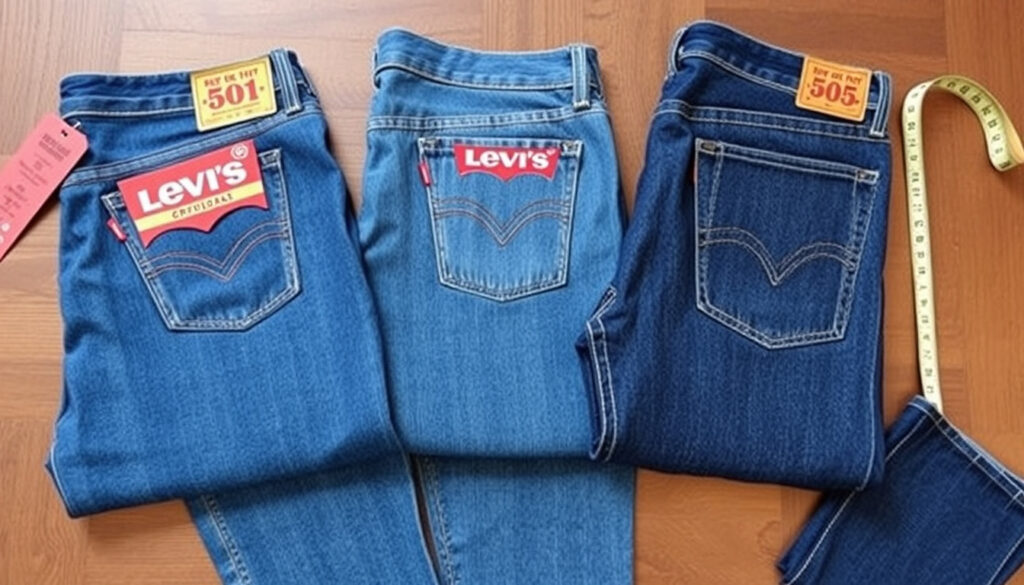
Levi’s Jeans: 501 vs 505 vs Ribcage Fit Guide
Anyone who’s ever stood in front of a rack of jeans, feeling the fabric and wondering which fit is for them, knows the weight of the decision. That iconic Levi’s 501 has been the answer for over a century, but with more than 30 modern variations, picking the right pair takes more than luck — so this guide cuts through the noise, comparing the flagship 501 with the 505 and the rising Ribcage to help you find the style that works for your body and your life, whether you’re shopping in Dublin or browsing online.
Founded: 1853 by Levi Strauss ·
Original 501 launched: 1890 ·
Global annual sales: Over 20 million pairs ·
Number of styles: More than 30 fit variations ·
Countries sold: 110+
Quick snapshot
- Levi’s was founded in 1853 (Levi Strauss & Co. Heritage page)
- The 501 model was first sold under that number in 1890 (Wikipedia – Levi Strauss & Co.)
- Levi’s is one of the top three global denim brands alongside Wrangler and Lee (Wikipedia – Denim)
- Exact annual sales figures for the 501 are not publicly verified.
- Which specific style is most popular among men over 60 is not formally documented.
- The precise number of Levi’s fit variations currently in production is unknown.
- Whether the 501 is the most sold Levi’s style has not been independently confirmed.
- 1853 – Levi Strauss opens a dry goods store in San Francisco (Levi Strauss & Co. Heritage page).
- 1873 – Patent for riveted denim pants is granted (Wikipedia – Levi Strauss & Co. History).
- 1890 – The 501 model is officially numbered (Wikipedia – Levi Strauss & Co.).
- 1947 – Wrangler is founded; Lee was founded in 1889 (Wikipedia – Wrangler jeans; Wikipedia – Lee jeans).
- Levi’s continues to expand its Ribcage line with new leg silhouettes.
- Seasonal sales and discounts in Ireland are common at Brown Thomas and Sports Direct.
- Online shopping with free delivery thresholds on Levi’s IE site.
Key facts about Levi’s jeans are summarized below.
| Attribute | Value |
|---|---|
| Founded | 1853 by Levi Strauss |
| 501 launch year | 1890 |
| Big three denim brands | Levi’s, Wrangler, Lee |
| Headquarters | San Francisco, California |
| Retail presence in Ireland | Brown Thomas, Sports Direct, MandM, Levi.com IE |
What are the different levels of Levi jeans?
Levi’s offers a wide range of fits, each designed for a different silhouette and preference. The main categories include slim, straight, bootcut, and relaxed, with specific model numbers that reflect subtle size and style variations. According to Levi’s official product descriptions, the 501 is a straight leg with a medium rise, the 505 is a regular straight with more room in the seat and thigh, and the Ribcage is a high-rise skinny fit (Levi’s Fit Guide – official site).
What type of jeans should a 60 year old man wear?
For men over 60, comfort and ease of movement often take priority. Classic straight or relaxed fits — such as the 501 or 505 — are frequently recommended because they provide a timeless look without being too tight. A report from the Chicago Tribune notes that looser fits help avoid the constriction of skinny jeans while still looking sharp (Chicago Tribune – style advice for older men). The 505’s slightly wider seat and zip fly make it a practical choice for those who prefer a traditional mid-rise.
What are the key fit differences between Levi’s styles?
The main variables between styles are rise height, leg taper, and closure type. The Ribcage jeans, for example, have a rise of about 11–12 inches, significantly higher than the average 10 inches found in standard high-rise jeans (The Mom Edit – guide to Ribcage fit). The 501 uses a button fly, while the 505 and most other modern styles use a zip fly. Leg shapes range from slim and tapered (511) to bootcut (517) and relaxed straight (559).
Which is better, Levi’s 501 or 505?
The 501 and 505 are both straight-leg jeans, but they differ in key construction details. The 501 has a medium rise, button fly, and a classic straight cut that fits close through the hip and thigh. The 505, by contrast, has a mid rise, zip fly, and a slightly wider seat and thigh, making it more accommodating for athletic or larger builds (Wikipedia – Levi’s jeans fits).
Is Levi’s 505 wider than 501?
Yes. Customer measurements and Levi’s own size charts confirm that the 505 is approximately half an inch to one inch wider in the seat and thigh compared to the same waist size 501. This extra room is intentional: the 505 is marketed as a “regular straight” with a more generous cut. For someone who wants a straight leg but finds the 501 too snug in the seat, the 505 is the natural alternative.
The trade-off: The 501’s button fly offers a retro look and a trimmer silhouette, while the 505’s zip fly provides convenience and a little more space. Neither is universally superior — your body shape decides.
Which is better, Levi’s 501 or ribcage?
The Ribcage is a high-rise, skinny-fit jean that sits several inches above the natural waist, while the 501 is a mid-rise straight leg. According to a review on YouTube, the Ribcage “skins the leg” and is quite fitted at the top, whereas the 501 has “a much more slim appearance” but still falls straight (Better Than 501’s? Review – YouTube). The Ribcage also offers a longer rise (11–12 inches) making it ideal for those who want extra coverage and a modern, elongating silhouette.
For women especially, the Ribcage is trending because it eliminates the gap between waistband and torso that many experience with mid-rise jeans. However, the 501 remains the go-to for a relaxed, timeless look that works across genders.
If you prioritize high waist and skinny legs, choose Ribcage. If you want a versatile, classic straight leg that never goes out of style, the 501 wins.
What are the big 3 denim brands?
The three historically dominant denim brands are Levi’s, Wrangler, and Lee. Levi’s was founded in 1853, Lee in 1889, and Wrangler in 1947 (Wikipedia – Levi Strauss & Co.; Wikipedia – Lee jeans; Wikipedia – Wrangler jeans). Each brand has its own fit philosophy and cultural following. Levi’s leads with its heritage and broad fit range; Wrangler is known for rugged durability and western fits; Lee is celebrated for innovation in comfort and design.
Which jeans brand is best in the world?
No single brand can claim the title of “best” universally. Best depends on what you value: history (Levi’s), durability (Wrangler), or comfort technology (Lee). Consumer Reports and fashion publications often rank Levi’s highest for brand recognition and style variety (Consumer Reports – best jeans brands).
Is Wrangler older than Levi’s?
No. Levi’s was founded in 1853, Wrangler in 1947. Levi’s is older by nearly a century. Lee, founded in 1889, is also older than Wrangler.
Why this matters: When you buy a pair of Levi’s, you’re buying into the invention of blue jeans. That heritage is part of the product’s cultural value.
Why is Levi’s 501 so popular?
Introduced in 1890, the 501 is the original blue jean — the design that started it all. Its popularity comes from a combination of factors: straight leg cut that flatters most body types, a rich history in Hollywood and pop culture, and a fit that has remained largely unchanged for over a century. Celebrities like James Dean, Steve McQueen, and Marilyn Monroe wore 501s, cementing their iconic status (Vogue – history of the 501).
The 501’s staying power lies not in innovation but in consistency. While other brands chase trends, Levi’s has kept the 501 essentially the same for 134 years — and that reliability creates loyalty that no seasonal fashion can break.
The 501 also fits into the “good for everyone” category. Because it’s not too slim and not too loose, it works for men and women, from teenagers to retirees. Its button fly, although less convenient, adds a tactile, old-school charm that many appreciate.
Where can I find Levi’s jeans for sale in Ireland?
Irish shoppers have several reliable channels for buying Levi’s jeans. The official Levi’s Ireland website (Levi’s IE official store) offers the full range with regular sales and free shipping on orders over €75. Major department stores like Brown Thomas (Dublin, Cork, Limerick) carry premium Levi’s styles, while Sports Direct stocks more affordable options nationwide (Sports Direct – Levi’s denim). MandM Direct also offers discounted Levi’s online (MandM Direct website).
For the widest selection — including niche fits like the Ribcage — the official site or Brown Thomas is your best bet. Sale events around Black Friday, January, and mid-season are common.
The pattern: In Ireland, physical stores are great for trying fits, but online shopping with free returns often gives better discounts and access to the full range.
Comparison: 501, 505, and Ribcage
Three iconic fits, three distinct profiles.
| Feature | 501 Original | 505 Regular | Ribcage |
|---|---|---|---|
| Rise | Mid (approx. 10.5″) | Mid (approx. 10.25″) | High (11–12″) |
| Leg shape | Straight | Straight, slightly wider | Skinny/straight |
| Closure | Button fly | Zip fly | Zip fly |
| Seat room | Standard | Slightly roomier | Fitted |
| Best for body type | Most body types | Athletic, larger thighs | Tall, slender, high-waist preference |
| Fabric composition | 99% cotton, 1% elastane (stretch version) | 99% cotton, 1% elastane | 99% cotton, 1% elastane |
| Cultural status | Iconic, original blue jean | Practical classic | Modern trend |
The three fits cover almost every need: the 501 for nostalgia and universal appeal, the 505 for extra comfort in the seat and thigh, and the Ribcage for a high-fashion silhouette. Your choice comes down to how much rise and taper you want.
These distinctions help narrow down the best option for your body type and lifestyle.
Specifications at a glance
Beyond fit, each Levi’s model has specific dimensions and construction details that matter when choosing.
| Specification | 501 | 505 | Ribcage |
|---|---|---|---|
| Waist sizes available | 26–44 (men’s), 23–33 (women’s) | 28–46 (men’s) | 23–33 (women’s) |
| Inseam lengths | 30″, 32″, 34″ | 30″, 32″, 34″ | 27″, 29″, 31″ (recently added 31″) |
| Rise (approx.) | 10.5″ (mid) | 10.25″ (mid) | 11–12″ (high) |
| Leg opening (size 32) | 16.5″ | 16.75″ | 13.5″ (skinny) |
| Fly type | Button | Zipper | Zipper |
| Stretch content | 1% elastane (many versions) | 1% elastane | 1% elastane |
| Color / wash options | 100+ | ~50 | ~30 |
Knowing these figures makes it easier to compare models without trying them on.
Pros & cons of Levi’s 501
Upsides
- Timeless style – rarely goes out of fashion
- Flattering on a wide range of body types
- Available in many washes and fits (including stretch)
- Strong cultural heritage and resale value
Downsides
- Button fly can be inconvenient for some
- Straight leg may be too loose for those preferring skinny fits
- Limited high-rise option (Ribcage fills that gap)
- Price premium over similar competitors
Weighing these pros and cons helps decide if the 501 is the right starting point.
What’s confirmed vs. what’s still unclear
Confirmed facts
- Levi’s was founded in 1853 (Levi Strauss & Co. Heritage page).
- The 501 model was patented in 1873 and first sold as ‘501’ in 1890 (Wikipedia – Levi Strauss & Co.).
- Levi’s is one of the top three global denim brands along with Wrangler and Lee (Wikipedia – Denim).
What’s unclear
- Exact annual sales figures for the 501 are not publicly verified.
- Which specific style is most popular among men over 60 is not formally documented.
- The precise number of Levi’s fit variations currently in production.
- Whether the 501 is the single most sold Levi’s style has not been independently confirmed.
“The 501 is the original blue jean that changed fashion forever.”
– FASHION Magazine, FASHION Magazine (Canadian fashion authority)
“Wrangler is younger than Levi’s by almost a century — Levi’s invented the blue jean, and that heritage matters.”
“The Ribcage jeans are quite fitted at the top and skin the leg, being very straight all the way down.”
These quotes reinforce the key differences between fits and the enduring status of the 501.
For the Irish shopper, the decision between a 501, 505, or Ribcage is not about which is better — it’s about which rise and leg shape match your body and your style. The 501 remains the benchmark for its universal cut, but if you need more room in the seat, the 505 delivers; if you want a modern high-waist look, the Ribcage wins. For men over 60, a classic straight or relaxed fit (501 or 505) provides comfort without sacrificing style. The choice is clear: try on the 501 first, then branch out based on what it doesn’t do for you.
youtube.com, fashionjackson.com, gearpatrol.com, levi.com, whowhatwear.com
For a detailed comparison of the 501, 505, and Ribcage, see detailed comparison of the 501, 505, and Ribcage which breaks down the fit charts and price points.
Frequently asked questions
What is the difference between Levi’s 501 and 511?
The 501 is a straight-leg, mid-rise jean with a button fly. The 511 is a slim-fit, mid-rise jean with a zip fly. The 511 is tighter through the thigh and leg, aimed at a more contemporary silhouette.
Are Levi’s jeans true to size?
Generally yes, but fit varies by style. The 501 tends to run a bit roomier, while the 511 and Ribcage are more snug. Always check the size guide on Levi’s website and consider the stretch content.
How should I wash Levi’s jeans to maintain shape?
Wash inside-out in cold water, hang dry to preserve color and fit. Avoid frequent washing — denim experts recommend every 10 wears unless soiled.
What is the most popular Levi’s jeans color?
The most iconic is indigo blue, specifically “Rigid” or “Stonewash” for the 501. Dark rinses are also popular for a dressier look.
Does Levi’s offer free shipping in Ireland?
Yes, on Levi’s official IE website, orders over €75 qualify for free standard shipping. Returns are also free within 30 days.
How do I choose the right Levi’s fit for my body type?
Use Levi’s online fit finder or try on the 501 as a baseline. If it’s too loose in the seat, go to 505; if you want a higher rise, try Ribcage; if you prefer a slim look, go to 511 or 512.
Related reading: Size 41 in Canada: Conversion to US and UK Sizes · Music Stores Near Me: Top Dublin & Ireland Shops Guide
More related posts
 32 oz to Liter: 0.946 L Conversion, mL & Hydration Tips
 Spider-Man Movie in Order (2026 Guide)
 NCAA March Madness 2018 – Full Results and Recap
 Final Fantasy 7 Remake: Trilogy Guide, Platforms & Differences
 Normal Temperature for Adults: Ranges, Fever, and When to Worry
 Toronto Raptors vs Utah Jazz Player Stats | Feb 1, 2026
 Who Is Andrew Tate – Kickboxer, Influencer And Legal Battles
 Do a Barrel Roll: Google Trick & Real Aviation Facts
